
Olaplex Treatment Explained: What It Does and Who Needs One
August 24, 2026 • Hair Tips
You're sitting in the chair, your stylist mentions "adding Olaplex" to your service, and you nod like you know exactly what that means. Maybe you've heard the name from a friend, or seen the little brown bottle on a shelf at the drugstore version, or read it on a color menu without ever getting a straight answer about what it's actually doing to your hair. You're not alone. Olaplex might be one of the most recommended, least explained treatments in the salon world.
Here's the plain-English version. If you color your hair, lighten it, or use heat tools regularly, there's a good chance Olaplex is doing more for you than you realize, and there's also a good chance you don't need it every single time. Let's talk about what it actually repairs, who benefits most, and how to know when it's worth the extra step.
What Olaplex Actually Does to Your Hair
Your hair is held together by bonds, tiny chemical connections inside each strand that give it strength and structure. Every time you color, lighten, perm, or use a flat iron or curling wand, some of those bonds break. A little breakage is normal and your hair can handle it. But repeated chemical processing or heavy heat styling breaks down more bonds than your hair can repair on its own, and that's when you start noticing the damage. Hair that snaps instead of stretching. Ends that feel like straw no matter how much conditioner you use. Color that fades faster because the structure holding the pigment in place is compromised.
Olaplex works differently than a regular conditioning treatment. Most deep conditioners coat the outside of the hair shaft and add moisture and shine, which feels great but doesn't fix what's happening on the inside. Olaplex actually finds and reconnects those broken bonds from within the hair. It's not a coating. It's a repair.
After more than 30 years behind the chair, I've watched a lot of "miracle" products come and go. Olaplex is one of the few that actually does what it claims. I use it as an in-salon treatment (what's called Olaplex No. 3 here) processed for about 20 minutes on wet hair, and it's a service I genuinely believe in, not just something on the menu to upsell.
Who Actually Needs an Olaplex Treatment
Not everyone who colors their hair needs Olaplex every visit. Here's how I think about it with clients.
You've Recently Lightened or Bleached Your Hair
Lightening is the most bond-breaking process there is. If you've gone lighter, especially more than one or two levels, or if you're maintaining highlights or a balayage, your hair has taken on real structural stress. This is where Olaplex earns its reputation. It's often the difference between hair that feels strong after lightening and hair that feels fragile.
You've Gone Through a Color Correction
If you're coming out of a color correction, whether that's fixing a box dye mishap or transitioning through multiple sessions to reach a new shade, your hair has usually been through more chemical processing in a shorter window than it normally would. I almost always recommend Olaplex during color correction work. It's part of what makes the process safer for your hair, not just a nice extra.
You Use Heat Tools Most Days
Daily flat ironing or curling can cause a different kind of damage, more mechanical than chemical, but the bonds still break down over time. If your hair feels dry, brittle, or prone to breakage even without a lot of color processing, Olaplex can help rebuild what heat styling wears down.
Your Hair Feels Different Than It Used To
A lot of my clients in their 40s and 50s tell me their hair just doesn't behave the way it used to, even with the same color routine they've followed for years. Sometimes that's hormonal, sometimes it's cumulative processing catching up, and sometimes it's simply that hair changes texture and density as we age. Olaplex isn't a cure for aging hair, but it can meaningfully improve strength and manageability when damage is part of what's going on.
The Three-Step Plan I Walk Clients Through
If you're wondering whether Olaplex belongs in your routine, here's how I approach it with someone new.
Step One: We Talk About Your Hair History
Before I recommend anything, I want to know what your hair has been through. Recent color changes, how often you use heat tools, whether you've had a keratin or smoothing service, and what your hair actually feels like day to day. This isn't a sales pitch, it's diagnosis. Some clients don't need Olaplex added every visit, and I'll tell you that honestly.
Step Two: We Add It Where It Matters Most
If your hair history points to real bond damage, I'll recommend Olaplex specifically around your lightening or color correction service, since that's when it does the most good. It's applied to wet hair and processed for about 20 minutes before your color or styling continues, so it fits naturally into a service you're already booking.
Step Three: We Track How Your Hair Responds
Hair repair isn't a one-time fix. I pay attention to how your hair feels and behaves over your next few visits. If it's noticeably stronger and more resilient, we keep it as part of your regular color maintenance. If your hair is holding up well without it, we don't force it in just to add it to the ticket.
What About the Olaplex You Can Buy at the Store
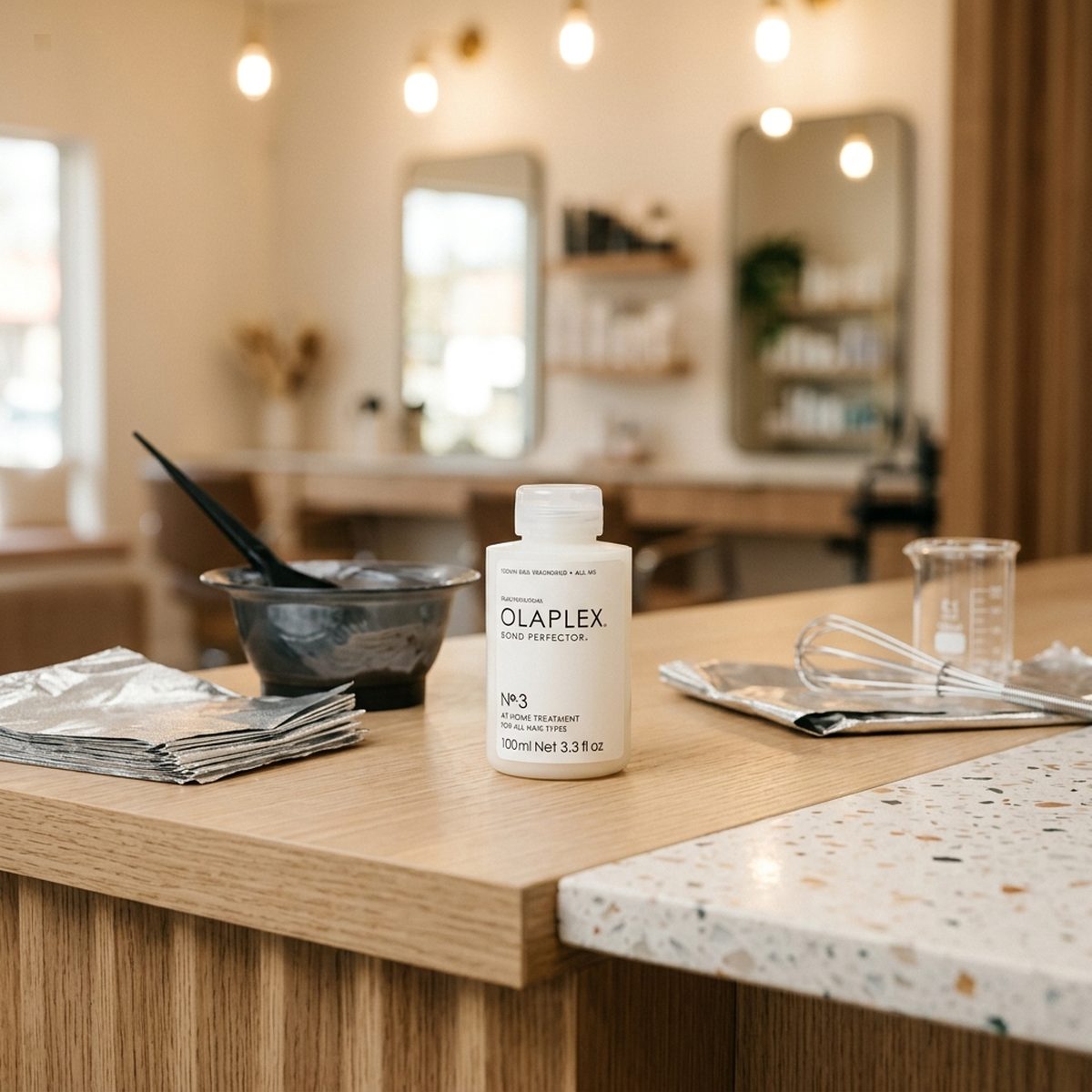
If you've browsed the hair care aisle, you've probably seen Olaplex No. 3 sold as an at-home treatment. It's a real product and it can help between salon visits, but it's worth understanding the difference. The retail version is formulated for home use, applied to dry or towel-dried hair and left on for a shorter window with no professional processing. The in-salon treatment I use is applied to wet hair right after your color or lightening service, when your hair's structure is most open to repair, and it's processed with more precision around exactly what your hair just went through.
Think of the at-home version as maintenance and the in-salon version as the actual repair work. A lot of my clients use both, the salon treatment as part of their color appointment and the at-home version as a between-visit boost. Neither replaces the other, and if your hair has real bond damage, the in-salon treatment is going to do more heavy lifting than the bottle from the store.
What Happens If You Skip It
I want to be honest with you about the stakes here, because I don't think scare tactics serve anyone. If your hair only sees occasional color and minimal heat styling, skipping Olaplex probably won't cause a noticeable problem. But if you're lightening regularly, going through a color correction, or already seeing signs of damage like breakage and dullness, skipping bond repair means your hair keeps absorbing that stress without anything helping it recover. Over time, that shows up as hair that feels thinner, breaks more easily, and holds color less vibrantly. None of that is dramatic on any single visit, it just adds up.
What Success Looks Like
The clients who add Olaplex where it counts tell me the same things. Their hair feels stronger between appointments. Color stays more vibrant longer, because the internal structure holding the pigment isn't as compromised. Ends stop snapping off in the brush. And maybe most importantly, they stop dreading the "how does my hair feel" question, because the answer is finally good.
That's really the goal of any treatment I recommend. Not to sell you something extra, but to make sure the color and cut you love today is still something your hair can support six months from now. If you've been curious about Olaplex, or you've noticed your color-treated hair isn't bouncing back the way it used to, that's a great place to start a conversation.
Ready to find out if bond repair belongs in your routine? Ask about Olaplex treatment at Moxi Hair Studio in McKinney, and we'll look at your hair's actual history, not just guess. If you're already planning your next balayage or foilayage appointment, ask about adding Olaplex to protect your color from the start. And if you're curious what other bond-damaging situations look like up close, take a look at what a color correction actually involves.
Follow: @moxihairstudiodfw