
Bangs After 40: Flattering or Aging? (An Honest Take)
August 19, 2026 • Cut
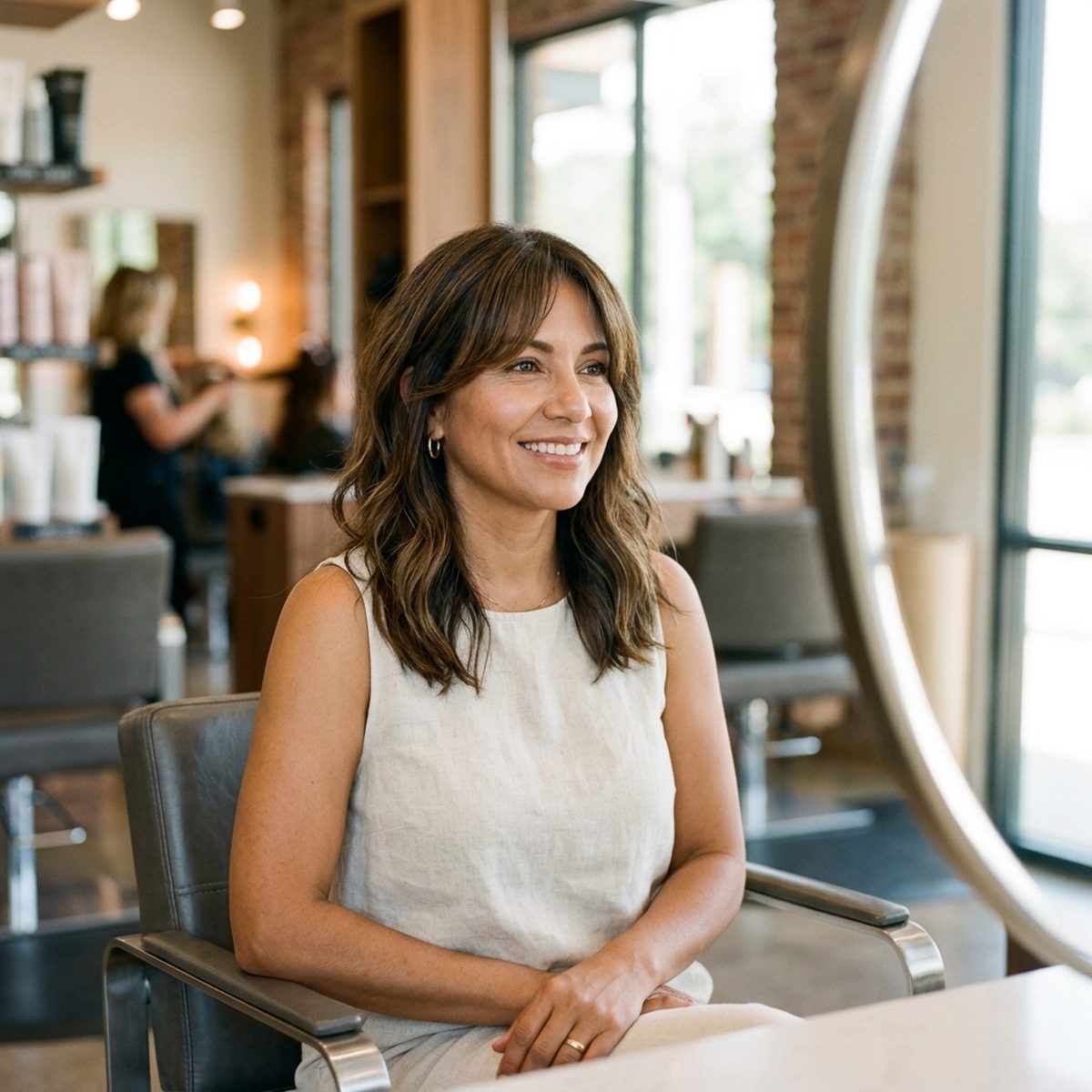
You've been staring at your reflection lately, pulling your hair back off your face to see what bangs might look like. Maybe you saw them on someone at the grocery store, or a client texted you a screenshot from Pinterest asking "could I pull this off?" It's one of the questions I get asked more than almost any other in my chair, and it usually comes with a nervous laugh. "I don't want to look like I'm trying too hard. But I also don't want to look older than I am."
That tension is real, and it's fair. Bangs after 40 can genuinely go either way. Done right, they take years off your face and soften lines you've started noticing around your forehead and brow. Done wrong, they can age you, make your face look boxier, or turn into a daily styling chore you resent within a month. The difference almost never comes down to whether you "can" have bangs at your age. It comes down to which bangs, and whether they're cut for your actual face and hair, not for the photo you brought in.
Why This Question Feels So Loaded
I think the reason bangs feel like such a big decision after 40 is that they're the one haircut choice that changes your whole face, not just your length or color. A cut behind your ears or a few new highlights, you can ease into those. Bangs are immediate and visible the second you walk out of the salon, and they take months to grow out if you hate them. That's a real commitment, and it's completely reasonable to feel cautious about it.
There's also an internal voice a lot of my clients describe, something like "will this make me look like I'm trying to be twenty-five again, or will it make me look tired and older than I feel." Neither extreme is what you actually want. You want to look like yourself, just a more polished, more current version of yourself. The good news is that bangs, cut correctly for your face shape and texture, can absolutely do that. They're not an either-or between youthful and aging. The right ones just look like a great haircut.
What Actually Determines Whether Bangs Flatter You
After more than 30 years behind the chair, I can tell you it's rarely about age at all. It's about three things: face shape, hair texture, and how much daily styling time you're honestly willing to give them. Here's how I walk clients through it.
Face Shape Rules That Actually Hold Up
- Round or square faces usually do best with longer, side-swept, or curtain bangs that create length and soften angles. Full, blunt bangs cut straight across tend to shorten a round face and can emphasize width.
- Oval and heart-shaped faces have the most flexibility. Curtain bangs, wispy bangs, even a soft blunt fringe can all work, because there's already good proportion to play with.
- Longer or narrower faces benefit from bangs with more horizontal weight, something that adds visual width at the forehead instead of drawing the eye up and down.
Texture Matters More Than People Expect
If you have naturally curly or very wavy hair, blunt bangs are a much bigger daily commitment because they shrink up and behave differently than they do on straight hair reference photos. Curtain bangs, which are longer, parted, and blend into the rest of your cut, are far more forgiving on wavy and curly textures and require less flat-ironing to look intentional. If frizz and unpredictable texture are the real issue, it's worth talking through a smoothing treatment alongside your cut so your bangs behave the same way on a humid McKinney morning as they did when you left the salon.
Be Honest About Your Morning Routine
This is the part people skip, and it's the part that makes or breaks whether you'll love your bangs in month two. Blunt, full bangs usually need touching up with a round brush or flat iron most mornings, especially in McKinney humidity. Curtain and side-swept bangs are much lower maintenance, they can often be finger-styled or air-dried into place. If you already feel stretched thin in the morning, that's not a small detail. It's the difference between loving your new look and secretly growing it out by October.
Your 3-Step Plan for Getting Bangs Right the First Time
Step 1: Get a Consultation, Not Just a Cut
Before any scissors touch your hair, I want to actually look at your face shape, your natural texture, your hairline, and how you wear your hair day to day. A consultation isn't a formality. It's how we avoid the most common bang mistakes, like cutting them too short for your forehead or too blunt for your curl pattern.
Step 2: Design the Right Bang for Your Life, Not the Photo
We'll talk through what you actually want the bangs to do. Soften your face? Cover a line on your forehead you're self-conscious about? Add movement to hair that's felt flat lately? A reference photo is a great starting point, but I'll adjust the length, weight, and shape so it works with your features and your styling habits, not just how it looked on someone else.
Step 3: Leave Knowing How to Style Them Yourself
Bangs live or die on whether you can recreate the look at home. Before you leave my chair, I'll show you exactly how to dry and style yours, and what to do on the days you don't have time for either. That's the piece that turns "I love this today" into "I love this every day."
What If You Change Your Mind?
This is the question I get right after "will it flatter me," and it's a fair one. Curtain bangs are the safest choice if you're nervous about commitment, because they blend into the rest of your length as they grow and never hit that awkward stage where they're too short to tuck back and too long to sit right. Blunt bangs take more patience to grow out, usually a few strategic trims to reshape them along the way. Either way, you're never stuck. I'll always tell you honestly what the growing-out process looks like before you commit, so there are no surprises three weeks in.
What Happens If You Skip the Guidance and DIY It
I've seen clients try to trim their own bangs between appointments, or ask for a style copied exactly from a photo without any conversation about their face shape or texture first. Almost every time, it doesn't go the way they hoped. Bangs cut too short can't be fixed with a flat iron, and bangs cut without texture in mind either need daily heat styling or never sit the way they're supposed to. The frustration isn't really about the bangs. It's about spending money and time on a change that made you feel less confident instead of more.
I also hear from women who avoided bangs entirely for years because a stylist somewhere else told them, without much explanation, that their face shape or hair type "wouldn't work" for it. That kind of blanket answer never sat right with me. Almost every face shape has a version of bangs that works, the question is just which version, and that's exactly what a real consultation is for.
What It Looks Like When Bangs Are Right
When bangs are cut for your actual face and hair, they don't scream "new haircut." They just look like you, refreshed. Clients tell me it's the compliment that means the most, when someone says "you look great" and can't quite pinpoint why. That's the goal. Not a dramatic before-and-after, just a version of your look that feels current, feels like less effort in the morning, and makes you a little more excited to catch your reflection.
If you've been debating this for weeks, you don't have to decide alone. If you're weighing bangs against a different kind of refresh, our layered haircuts guide for women over 40 covers another way to add movement without the daily commitment bangs require, and our hair color guide for women over 50 pairs well if you're thinking about a fuller refresh at the same time.
Ready to find out what bangs would actually look like on you? Book a consultation with me at Moxi Hair Studio in McKinney, TX, and we'll figure it out together, honestly, before anything gets cut.
Follow: @moxihairstudiodfw